Problems We Solve
Creating a Single Source of Truth for Your Business
A reliable operating view comes from intentional data flow, not another dashboard on top of conflicting records.
Start with our AI agent. Find your next step.
Operating Friction
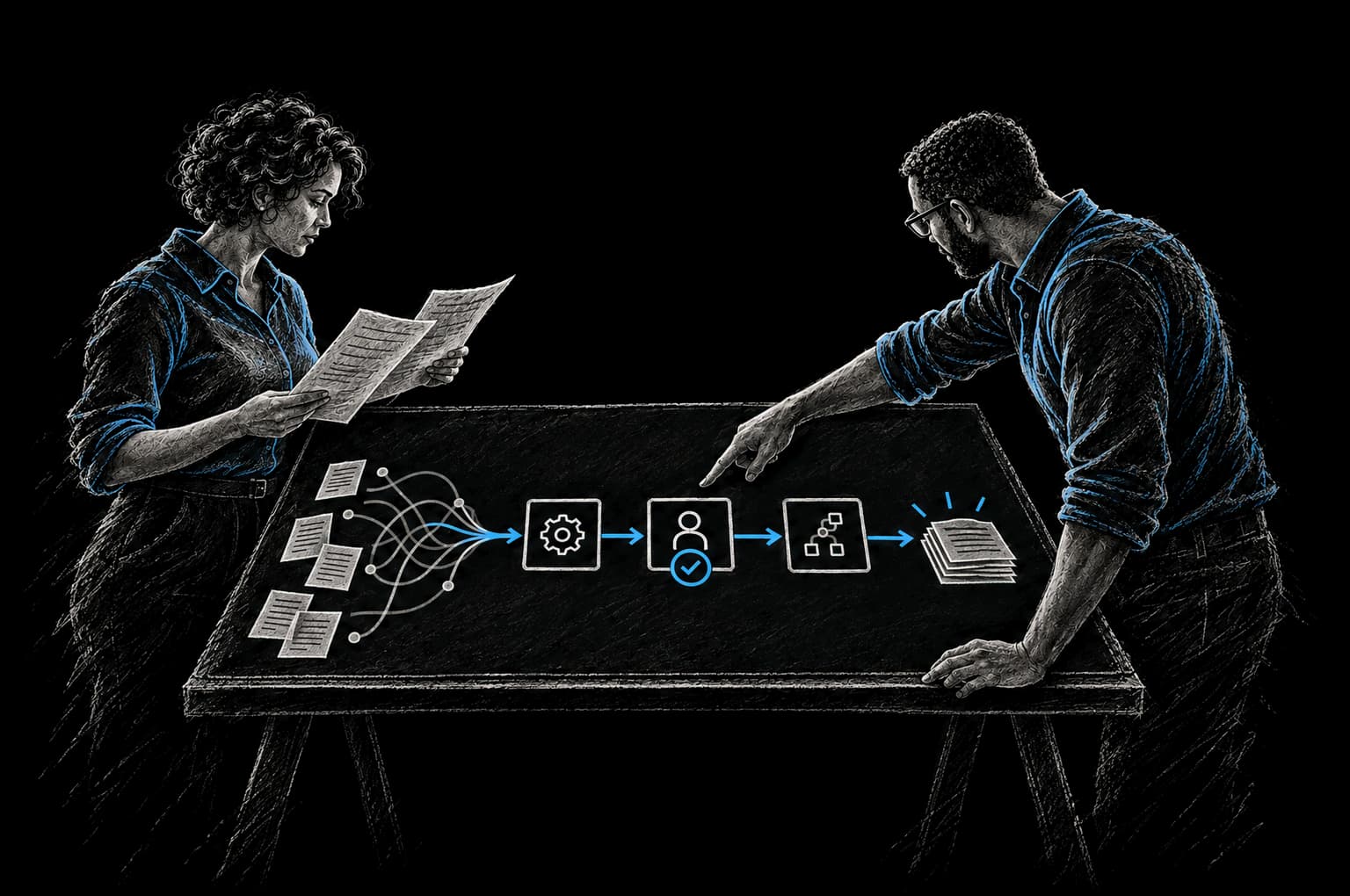
Truth has to be designed
- Define which system owns each critical record
- Normalize the data leaders use to decide
- Make updates flow instead of being reconciled manually
Your finance team says revenue is $1.2M this quarter. Sales says it's $1.4M. Operations is still reconciling last month's numbers. By the time someone figures out what's actually true, the quarter is half over.
This isn't a spreadsheet problem. It's an architecture problem.
When data lives scattered across disconnected systems, different teams work from different versions of reality. The cost isn't just confusion. It's slower decisions, rework, missed opportunities, and the slow erosion of trust in your data. Manual re-entry and reconciliation across disconnected systems is a recurring cost most mid-market companies have never measured. Our assessment measures it.
A single source of truth means everyone in the business works from the same facts. Not copies. Not yesterday's export. Not four different interpretations of what the CRM says. One authoritative version of each type of information that feeds every system that needs it.
Why the Problem Exists
You didn't wake up one morning and decide to create data chaos. Your tools accumulated organically. Sales bought a CRM and started tracking customers there. Finance implemented an accounting system. Operations created a project tracking tool. Each system became the source of truth for the data it generated.
The problem emerges gradually. Sales data lives in Salesforce. Revenue lives in QuickBooks. Customer health signals live in your support tool. Customer communication history lives in email and Slack. Nobody designed a connected data architecture. The gaps between systems became invisible until they became expensive.
Then you start:
- Pulling reports from each system and comparing them manually
- Assigning someone to "reconcile" data between tools each week
- Building one-off Zapier workflows or spreadsheets as band-aids
- Having conversations like "wait, which number are we using for the board meeting?"
Each of these is a signal that your data architecture isn't working.
The Real Business Cost
The impact of fragmented data isn't theoretical. McKinsey found (opens in a new tab) data-driven organizations are 23 times more likely to acquire customers, six times as likely to retain them, and 19 times as likely to be profitable. Being data-driven depends on data you can trust, and that starts with integration.
For a mid-market company, this translates to:
- Wrong strategic decisions. You close a deal you thought was $100K but it's actually $50K because nobody reconciled the contract with the forecast. Or you miss a churn signal because the data hasn't been connected from support to CRM to financial forecasting.
- Operational drag. Teams spend hours every week answering "what's the right number?" when they should be spending that time on work that moves the business forward.
- Compliance and audit risk. When you can't prove your data came from a single source, auditors flag it. Finance has to reserve time for manual reconciliation instead of analysis.
- Slow response to problems. An important customer is at risk of churning, but that signal lives in support tickets, not your CRM or financial system. By the time someone connects the dots manually, it's too late.
What a Single Source of Truth Actually Means
"Single source of truth" doesn't mean one spreadsheet. It doesn't mean you have to consolidate all your tools into one platform. It means:
For each type of data, one system is defined as authoritative. Customer data authoritative in your CRM? Then revenue is pulled into finance from the CRM, support tickets reference the CRM customer record, and operations uses the same customer view. Changes made to the customer record in the CRM are reflected everywhere downstream.
Every other system that needs that data receives it from the source. Not a daily export. Not a manual copy. A real connection that keeps data current.
Definitions and data quality standards are enforced at the source. If customer revenue is a field in your accounting system, but three other systems define it differently, you don't have a source of truth. You need one agreed definition, enforced by the system that owns the data.
In practice, this usually means:
- Integration between your core systems so they communicate automatically
- A data layer that normalizes and serves data to multiple systems
- A clear contract: these questions can be answered from this system, and here's how current that data is
You don't throw away your tools. You wire them together intentionally.
How to Get There
Building a single source of truth is technical, but the path starts with business strategy, not databases.
Start by defining what questions you need to answer. Not "what's the revenue?" but "can we see revenue by customer, by service line, with a 2-day lag?" or "which customers are at-risk, updated daily?" or "what's the status of all active projects, and which are behind schedule?" These questions define what data needs to be connected and how current it needs to be.
Map where that data currently lives. Which system is authoritative for customers? For revenue? For project status? Some of this is obvious. Some of it is a mess. Both are fine to start.
Design the connections. This might be:
- Native integrations between tools you already use
- A middleware layer that pulls data from multiple sources and normalizes it
- An API that makes one system the source and feeds other systems
- Replacing fragmented tools with a unified system where that's the bottleneck
Build with reversibility in mind. You probably won't get this right on the first pass. Data architecture changes as your business and tooling change. The goal is to make the next change easier than the last one.
How InTech Approaches This
We start with an Intent Contract. An Intent Contract is a short, signed-off statement of the outcome, scope, success metrics, constraints, human authority boundaries and acceptance criteria. It is not a legal agreement; commercial terms live in the engagement agreement. For data work, it defines the questions your business needs to answer, and we work backward to the data architecture required to answer them.
In practice: You tell us "we need to know which customers are at risk within 24 hours" or "we need visibility into revenue recognition as work completes, not a month after the invoice." We map what data sources feed those questions. We design a connected architecture that pulls data from your existing systems (or identifies where you need new ones). We build the integrations or data layer that makes those questions answerable.
This isn't a data warehouse project that takes six months. It's identifying the gaps in your current system, wiring them together, and starting with the questions that have the highest business impact.
FAQ
How long does it take to build a single source of truth?
It depends on how fragmented your current data is. If you have two systems that need to be connected, it can often be done in weeks. If you have five systems with conflicting definitions, it's longer. We set the timeline in the Intent Contract before build starts. Start with the data that has the highest business impact, not all of it at once.
Do we need to replace all our tools?
Not usually. Most companies have some good tools that need to be wired together better. We start by mapping what you have, identifying the critical gaps, and building connections. Tool replacement is usually later and tactical.
Our CRM data is a mess. Where do we start?
That's normal. Data quality improves once you define a single source of truth. When there's one authoritative version, cleaning it becomes a focused project. When you have five copies, cleaning is endless. Define the source first, then invest in quality.
How do you handle real-time data vs. acceptable lag?
Different data types have different refresh requirements. Customer data might need to be current within hours. Revenue forecasts might be fine with a daily refresh. Historical data doesn't need real-time updates. We define the lag requirement when we define the questions the business needs to answer.
Can you do this without touching our systems?
Partially. We can build data integrations and layers without replacing tools, but at some point, you may find that one of your systems is the wrong choice for being a source of truth. That usually becomes clear once the rest of your architecture is in place.
What happens if we outgrow the architecture we build?
Good question. A single source of truth isn't permanent. It evolves as your business changes. The goal is to build it in a way that makes the next evolution easier, not harder. This means using standards-based approaches, clear data definitions, and reversible decisions.
From Friction to Proof
Bring us the part that’s getting in the way.
Tell our AI agent what you want to improve. We’ll help you find a useful first step.
Start with our AI agent. Find your next step.