Strategic leads stay accountable through verification.
A strategic lead stays accountable from the first framing through measured results, and at every quarterly value review after that.
What we do
AI strategy, product engineering, and managed operations. One accountable team, from the first decision through the system running in production.
Start with our AI agent. Find your next step.
Strategy, product, engineering, and managed operations. One accountable team. One operating system. We help you decide what AI should change, redesign the product or workflow around that opportunity, build the governed system that produces the result — and then run it.
Adoption adds AI tools. Adaptation changes how the product or business actually works.
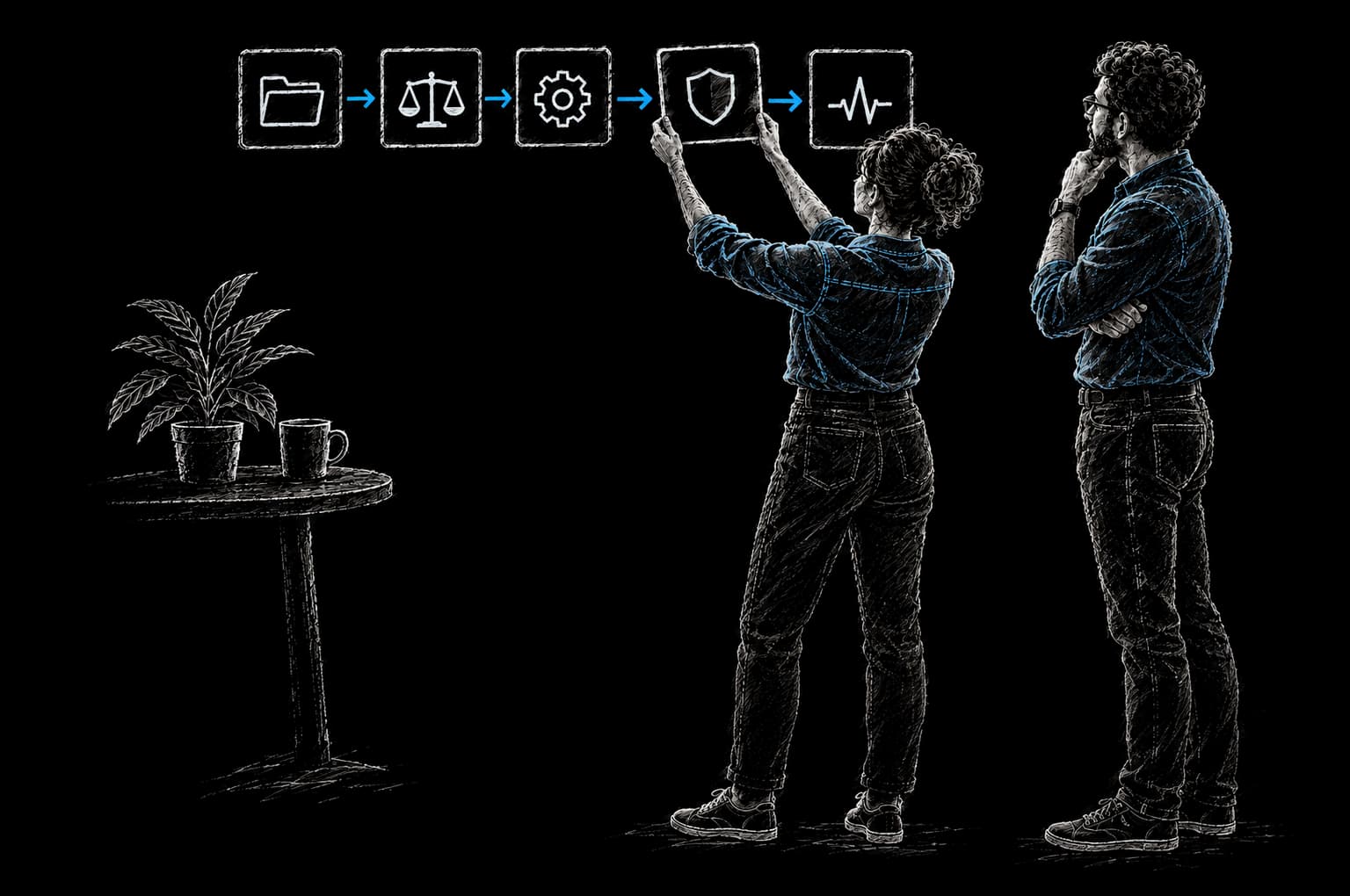
One accountable team stays responsible from opportunity through operation. Specialists join as needed, and because intent, decisions and context are written down under CRAFT, they carry forward when people change. What we learn in production starts the next cycle.
Executive interviews, product and workflow mapping, friction and exception analysis, and a systems and data inventory. We look for the business friction or product opportunity that AI has just made addressable — not a list of use cases.
Strategic lead, product strategist, solution architect, and the engineers who would build it.
An opportunity map and prioritized value hypotheses.
A named constraint with a plausible, measurable outcome behind it.
Four rules keep the loop continuous. They are the reason the six stages behave like one system instead of six departments.
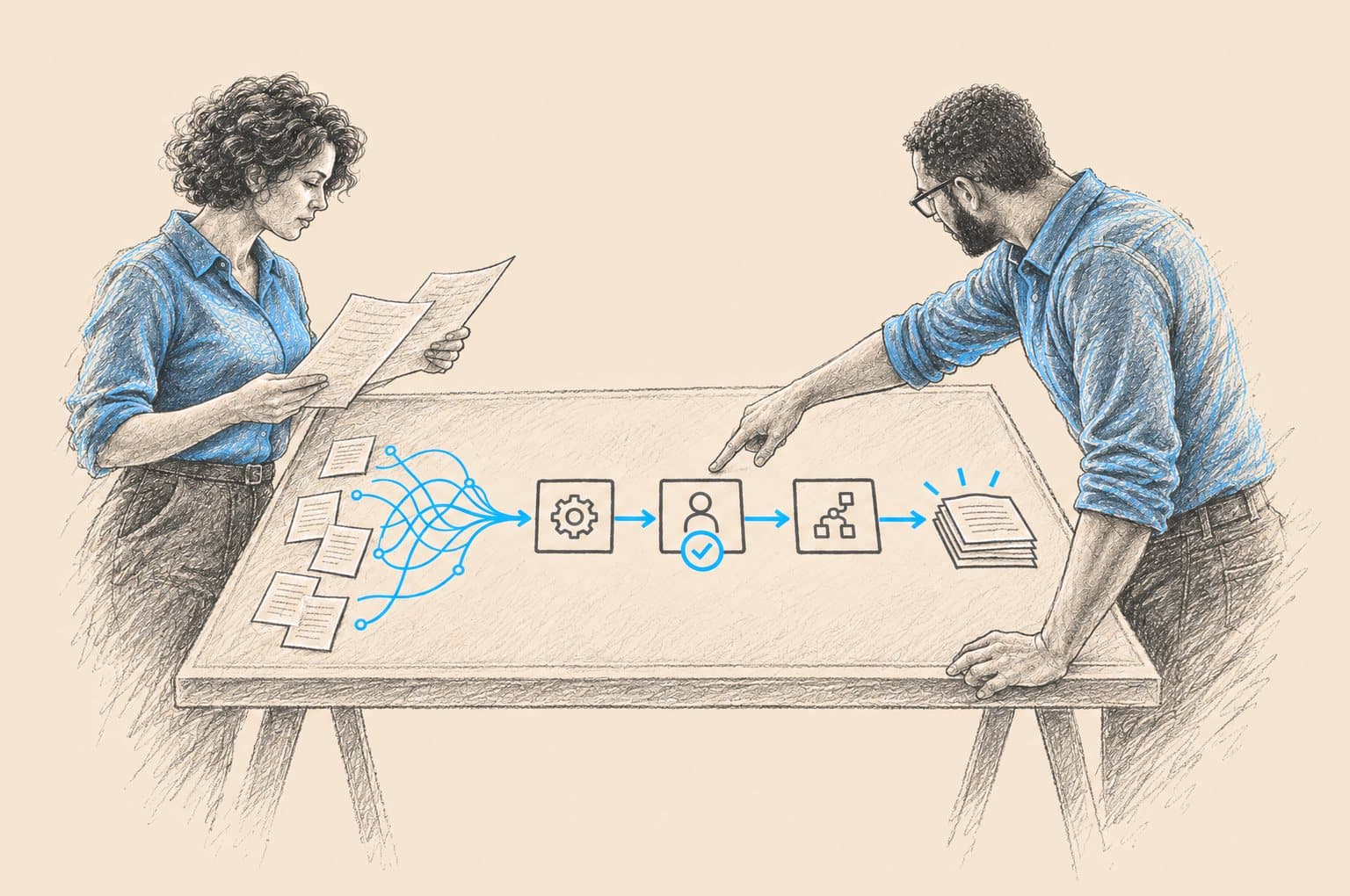
A strategic lead stays accountable from the first framing through measured results, and at every quarterly value review after that.
The people who will build the system hear the friction firsthand, so feasibility and architecture shape the plan from day one.
Verification, risk, and supportability move into solution definition — not bolted on at the end.
Launch begins a managed learning cycle. Exceptions, adoption, and cost data tell us where the next opportunity is.
Most new engagements start with an assessment. Every engagement starts with clear intent and a measurable baseline.
The Control Plane
The six stages describe what we do. CRAFT describes how we govern it.
CRAFT (Context, Rationale, Automate, Fortify, Telemetry) is InTech's operating system, the governance underneath strategy, product engineering and managed operations. Pro-Neering is the philosophy behind it.
In practice, CRAFT captures intent, context, decisions, and risk; gates releases on evaluation; and turns production telemetry into organizational learning you keep.
The old software conversation starts with headcount and requirements. Ours starts with friction, outcomes, and what should stay human.
The old question“What do you want us to build?”
What we ask“What friction or opportunity matters most?”
The old question“Can AI automate this?”
What we ask“Should this be automated, augmented, redesigned — or left human?”
The old question“What's next on the backlog?”
What we ask“What did telemetry reveal about the next constraint?”
Measurement
The time from an approved Intent Contract to an agreed outcome being verified in production. Not story points. Not features shipped. Not tokens generated.
Defined at the start of delivery work and reported when the agreed production outcome can be measured.
Assessment work uses the companion measure Time to Buildable Decision — from assessment kickoff to an approved Intent Contract. Once the system is running in production, the operate measure is Time to Next Verified Improvement.
Supporting measures
This example demonstrates the measurement model. It is not presented as a client result.
01 · CONSTRAINT
Quote turnaround averaged 6.2 days. Manual handoffs created delays and errors.
02 · INTENT
Reduce turnaround below 2 days while preserving human approval for exceptions.
03 · SYSTEM
AI-assisted intake, enrichment, routing, and a governed approval workflow.
04 · RESULT
1.4-day average over a 30-day measurement window. Override rate 3.1%.
05 · NEXT
Telemetry identified exception routing as the next constraint to address.
Inside the work
Engineers participate in discovery — the people who build the system hear the friction firsthand.
Intent reaches the build team firsthand, not through a translation layer. Context, intent, and ownership stay with one accountable team from the first conversation through the system running in production.
Most new engagements start with a fixed-scope assessment that ends in decisions, baselines, and your first buildable Intent Contract — whether or not you build with us.