Problems We Solve
Improving Business Decision Making with AI and Connected Data
Good judgment still goes wrong when the numbers behind it are late, scattered, or contradictory.
Start with our AI agent. Find your next step.
Operating Friction
Signs decisions run on stale data
- Two systems give two answers to one question
- Reports arrive after the decision is made
- Problems surface only once they cost money
Most business decisions happen in the dark. Not because leaders lack judgment (they don't), but because the data that should inform those decisions is trapped across disconnected systems, days or weeks out of date, or contradictory depending on which system you ask.
A CFO pulls last month's revenue report and makes a budget decision. A sales leader cancels a deal because forecasts from the CRM don't match what finance sees. A product team ships a feature because they didn't have visibility into how similar features performed with customers. The decisions aren't wrong; they're just made with incomplete information.
Better decision making starts with better information. And that means connected data and AI systems that surface the signal instead of the noise.
Why Business Decision Making Stays Broken
The problem isn't usually one thing; it's the accumulation of many things.
Data lives in islands. Your CRM has customer data. Your ERP has operational data. Your accounting system has financial data. Your analytics platform has user behavior. None of them talk to each other by default, so pulling a complete picture requires manual work: queries, spreadsheets, exports, stitching things together.
Reports are always out of date. Even if you build dashboards, they're typically refreshed daily or weekly. But the world moves faster than that. By the time you see last week's numbers, the situation has changed. A customer is about to churn, a process is degrading, an opportunity window is closing, and you don't see it until it's too late.
Different systems show different numbers. Ask your CRM how much revenue closed this quarter, then ask your accounting system, and you might get different answers. Not because anyone is lying, but because they track the same event differently. This ambiguity paralyzes decision-making. Which number do you trust? Who do you believe?
There's no early warning system. By the time most metrics hit your awareness, they've already become problems. You're reacting instead of anticipating.
Insights are buried in data. You have the data. It's just hidden. It takes an analyst three hours to pull a report that answers a single question. That report sits in an email. Someone else needs the same insight next week and doesn't know it exists, so they request it again. Or they make a decision without it.
The Business Impact of Uninformed Decisions
These aren't small problems. They compound.
Companies with poorly integrated data are slower to move, slower to respond to market changes, and slower to capitalize on opportunities. They make more mistakes because they're working from incomplete information. They lose revenue because signals get missed. They lose time because people are manually moving data instead of making decisions.
Research shows the cost is substantial. IBM research (opens in a new tab) estimates that poor data quality costs U.S. businesses approximately $3.1 trillion annually through lost revenue, operational waste, and compliance failures. McKinsey's 2025 research found that while 78% of organizations now use AI, 80% of those organizations report no clear bottom-line effect. In our experience, a common reason is that AI implementations aren't connected to actual decision-making workflows. They're running in isolation, generating insights that never reach the person who needs to act on them.
Every day a critical metric goes unnoticed is a day a corrective decision doesn't happen.
What Better Decision Making Looks Like
The alternative is simple to describe but requires intentional design to build.
Real-time operational visibility. Dashboards and alerts that show you what's happening right now, not what happened last week. A sales leader sees this morning's pipeline changes. A product leader sees yesterday's user behavior patterns. A CFO sees cash position updated daily. Key metrics are available without requesting a report.
Anomaly detection that flags problems before they become crises. AI systems that know your baselines and alert when something deviates. Revenue is flat when it should be growing. Churn is ticking up. A critical process is running slow. Inventory is depleting faster than expected. You see these early enough to respond.
One version of the truth. When you ask "how much revenue closed this month" the answer is the same whether you ask the CRM, the accounting system, or the dashboard. The data is consistent because the systems are connected at the source, not stitched together manually afterward.
Historical pattern recognition that predicts what's likely to happen next. AI that learns from your historical data and flags patterns. This product feature performs similarly to another feature that had adoption problems. This customer profile matches others who churned. This inventory pattern preceded a stockout last time. The system learns from your history so you can make better bets about the future.
Insights delivered to the people who need them. Instead of reports sitting in inboxes, insights surface in the workflows where decisions happen. A metric changes, an alert goes to the right person. A pattern is detected, context is provided. Decision-makers have what they need when they need it.
This isn't about replacing human judgment. It's about informing it with better data, faster.
How Most Organizations Approach This (And Where They Stall)
The typical path looks like this: buy a BI tool, connect some data sources, build some dashboards, declare victory. Then reality sets in.
The dashboards are built around historical data and take months to update when business changes. Getting new data into the system requires engineering work. The data is inconsistent because the source systems track things differently and nobody has invested in standardization. Dashboards are built but not used because they don't answer the questions that actually drive decisions. Maintenance becomes a burden.
Or the approach is: "Let's implement an AI solution." So you buy a platform that promises insights. It generates reports. Nobody uses them because they're not connected to the workflows where decisions actually happen.
Or, most commonly: you build point solutions for the most obvious problem, solve it locally, and leave the underlying integration problem unsolved. So you get better reporting for sales, but your operations team still doesn't have visibility. You automate one process but the data it depends on still requires manual reconciliation.
The issue is usually one of these: the vision is too narrow (solving one problem instead of the integration problem), the implementation doesn't connect to workflows (insights exist but people don't see them), or the solution isn't maintained because the architecture is brittle.
The InTech Approach: Connected Decision Systems
We build this differently because we approach it as a system problem, not a reporting problem or an AI problem.
First, we understand what decisions matter. Not all metrics are equally important. We work with you to identify the decisions that drive the most revenue, protect the most margin, or unlock the most opportunity. Sales velocity matters more than activity count. Churn prediction matters more than raw churn. Gross margin per product matters more than total revenue if you have unfavorable product mix.
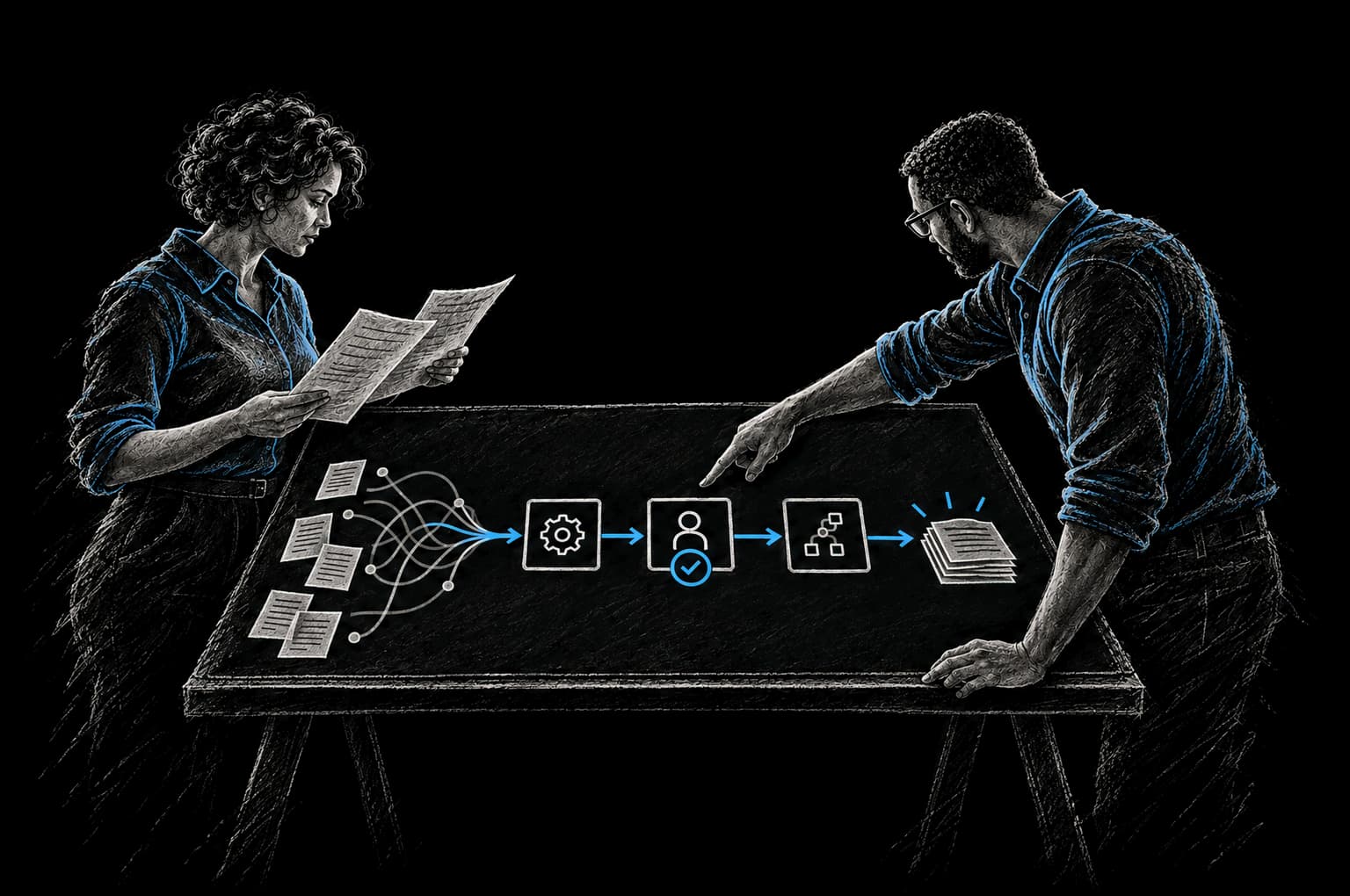
Then we connect the data sources that inform those decisions. This is integration work. APIs, data pipelines, ETL, whatever the architecture requires. The goal is to establish a single source of truth for each critical metric. If five different systems track customer health, we designate which one is authoritative and route the others to sync with it. This removes the "which number is right" problem.
We build dashboards around decision workflows, not generic reporting. Instead of building a sales dashboard that shows everything, we build the specific view that helps your leadership team make the Friday forecast call. Instead of a general finance dashboard, we build one that supports your weekly cash review. The dashboard serves the workflow.
We layer in AI for pattern detection and anomaly alerting. Once the data is clean and connected, AI becomes useful. It learns your baselines, watches for deviation, and alerts when something unusual happens. This is where early warning systems become possible.
We integrate alerts and insights into the tools you already use. Dashboards are great for exploratory analysis, but decisions happen in email, Slack, calendar, meetings. Insights should reach decision-makers in those places, not buried in a tool they have to remember to check.
The result is that your decision-making becomes faster, more informed, and more consistent. You're not operating on last month's data or conflicting reports. You have clarity, early warnings, and context at the moment you need to decide.
Why This Matters Now
The competitive pressure is real. Your competitors who have connected data and AI-assisted insights are making faster decisions. They're responding to market changes quicker. They're catching problems earlier. They're capturing opportunities faster.
The cost of staying as-is compounds over time. Every day you're making decisions with incomplete information is a day you're at a disadvantage.
The technology to fix this has become accessible. Five years ago, building connected decision systems required specialized talent and significant investment. Today, the tools exist. The path is clearer. The ROI is faster.
But it still requires intentional design. It's not something that happens by accident or by buying a single platform. It happens because you make the decision to solve it as a system problem, not a point problem.
Frequently Asked Questions
How long does it take to build a connected decision system?
It depends on complexity. A simple system connecting two or three data sources and building dashboards for a specific workflow is the quickest to deliver. More complex systems involving data standardization, historical data reconciliation, and multiple workflows take longer. We set the timeline in the Intent Contract before build starts. We typically recommend starting with the highest-impact decision first, shipping it, and iterating from there rather than trying to solve everything at once.
Do we need to change our existing systems?
Not necessarily. The goal is to connect what you have, not replace it. We work within your existing infrastructure. Salesforce, QuickBooks, HubSpot, NetSuite, SAP and most other modern platforms have APIs that let us pull data without disruption, and for custom systems without one we can often work through exports, database access or document capture. Sometimes data quality improvements are needed (cleaning duplicate customer records, standardizing naming), but system replacement is rarely necessary.
What if our data quality is poor right now?
That's common and solvable. Part of the process is assessing current data quality and fixing the most critical issues. Often this is straightforward: deduplicating customer records, standardizing how certain events are logged, reconciling conflicting data. We do this alongside building the connected system, not as a prerequisite that blocks you.
How do we know if it's working?
Clear metrics: time to decision decreases, decision quality improves (measured by outcomes), anomalies are caught earlier, stakeholders report more confidence in the numbers. We agree on the baseline and the target with you before work starts, and report the result against that baseline.
What about data security and compliance?
Security and compliance are designed in from the start. We work with your security and compliance leads on access control, data retention and audit logging, and data stays in infrastructure you control or approve. Integrations use authenticated APIs.
From Friction to Proof
Bring us the part that’s getting in the way.
Tell our AI agent what you want to improve. We’ll help you find a useful first step.
Start with our AI agent. Find your next step.