Industries
AI Operating Systems for Franchise and Multi-Location Businesses
Connect POS, inventory, staffing, and compliance data so corporate sees the whole network and franchisees spend less time on reporting.
Start with our AI agent. Find your next step.
Franchise and Multi-Location
One view across every location
- Consolidate reporting across locations
- Guide daily compliance checklists
- Flag inventory and labor variances early
Running a franchise or multi-location network means managing a paradox: you need consistency across every location while giving local operators the autonomy to serve their markets. The bigger your network grows, the more this tension amplifies. Without connected systems, you lose visibility. With the wrong systems, you create bureaucratic friction.
Most franchise networks rely on a fragmented tech stack. Each location runs its own POS. Corporate pulls reports manually. Inventory is tracked locally, not centrally. Compliance checklists live in email. By the time data reaches headquarters, it's already stale.
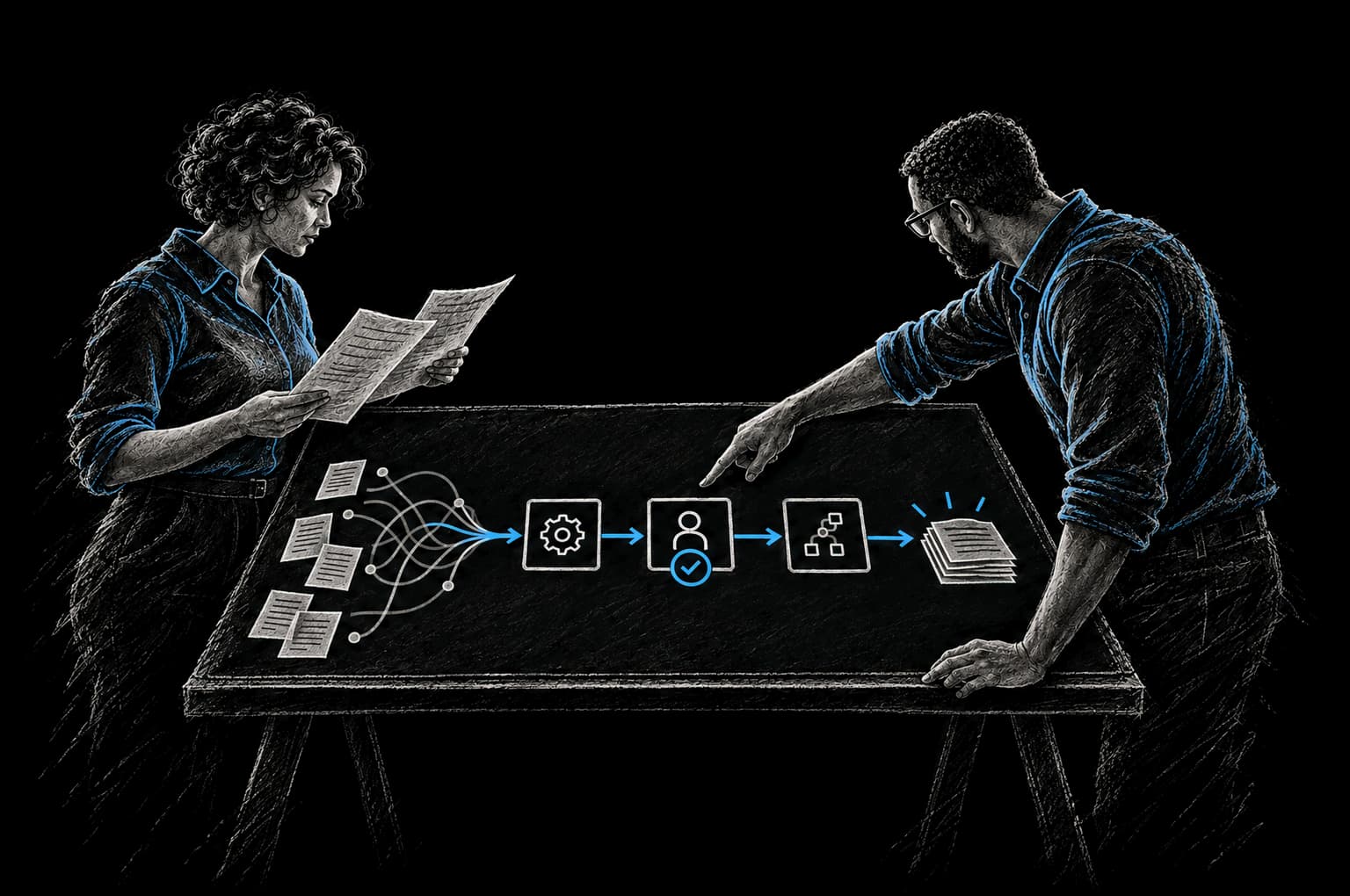
An AI Operating System solves this by creating a single source of truth across your entire network, automating the manual work that keeps you from scaling, and giving franchisees real-time guidance without micromanagement.
The Real Cost of Disconnected Systems
Every franchise network loses money to disconnection. Not all at once, but continuously.
Each location generates operational data: sales, inventory, staffing, customer interactions, compliance checks. When that data stays siloed, your corporate team can't act on it. You're managing blind.
The Zylo 2025 report (opens in a new tab) shows that the average company now uses 106 to 275 SaaS applications. For multi-location businesses, this sprawl is even worse. You might have a POS at each location, separate inventory software, a different payroll system, email for communication, spreadsheets for compliance, and a CRM that doesn't talk to any of it.
Manual data consolidation is the tax you pay. Manual re-entry and reconciliation across disconnected systems is a recurring cost most mid-market companies have never measured. The assessment measures it. For a growing franchise network, that cost compounds fast. Every location, every manual report, every compliance check that requires human assembly costs time your team doesn't have.
Then there's the operational drag. Nearly 60% of workers could save 6 or more hours weekly (opens in a new tab) if repetitive tasks were automated. For franchisees managing a location, that's six hours that could go toward customer experience, training, or actually growing their business. Instead, it goes into data entry and compliance busywork.
The Seven Core Challenges of Multi-Location Operations
1. Real-Time Visibility Across Locations
Corporate doesn't know what's happening at individual locations until it's already happened and someone sends a report. You see sales trends days or weeks after they occur. You learn about inventory problems when customers call complaining. Operational issues stay hidden until they become crises.
2. Manual Reporting Consolidation
Each location produces its own reports. Corporate assembles them manually into a consolidated view. This is not strategic work. It's busywork that delays decision-making and introduces error. A franchisee forgets to submit their numbers on time. A location uses different categories for the same data. Numbers don't reconcile. Someone has to chase down the discrepancy manually.
3. Enforcing Brand and Operational Consistency
Ensuring all locations follow the same processes, pricing, promotions, and compliance requirements is mostly manual. You send emails about new procedures. Some locations implement them; others don't. You audit locations and find they've drifted from standards. You enforce compliance after the fact instead of preventing deviation upfront.
4. Inventory and Supply Chain Fragmentation
Inventory is tracked locally, not centrally. You can't see network-wide stock levels. Some locations overstock while others run out. You can't optimize reorders across your network. Each location manages suppliers independently, losing negotiating power.
5. Distributed Workforce Scheduling and Performance
Coordinating schedules across locations, tracking labor costs, and monitoring performance metrics is manual. You compile time-clock data from multiple systems. You don't see performance patterns until they're already costing you. Staffing issues at one location could be solved by visibility into staffing at another.
6. Franchisee Communication and Change Management
Pushing updates, promotions, and operational changes to franchisees with confirmation that they've been received and implemented is difficult. Email chains break. Updates get lost. You don't know whether a promotion actually launched across all locations. Compliance updates disappear into inboxes.
7. Customer Experience Inconsistency
Customer data lives in different systems at each location. Loyalty programs don't track across branches. Service standards vary because you can't enforce them consistently. A customer has a good experience at one location and a poor one at another. You lose repeat business and brand value.
Where Data Gets Trapped
The core problem is architectural. Your systems aren't built to share data.
Each location has its own POS that doesn't integrate with corporate systems. Corporate reporting requires manual data pulls from each location, usually by email or via separate portals. Inventory is tracked locally in spreadsheets or standalone software, not centrally visible. Franchisee communication happens through email with no tracking of what was received, read, or implemented. Customer data is captured at the point of sale and stays there.
This fragmentation isn't accidental. It's the result of technology that was built for single-location businesses and forced into multi-location structures. It creates a version of the Tower of Babel where everyone is speaking, but corporate is getting every tenth word.
The AI Operating System Approach
An AI Operating System for franchise networks creates a connected infrastructure that addresses all seven challenges together.
It starts with unification. All location-level data flows into a centralized platform. Your POS data, inventory, customer interactions, staffing, compliance, and franchisee communications become part of a single operational graph. This doesn't mean centralizing control. It means centralizing visibility.
From that unified data, the system generates real-time dashboards that show corporate what's happening across every location. Not historical reports. Real-time views of sales, inventory, performance, and compliance. When something deviates from standard, you see it immediately.
Automation handles the repetitive work. Instead of franchisees manually entering compliance checklists, the system prompts them with guided workflows that capture data in real time. Instead of corporate pulling and assembling reports, the system consolidates data automatically and surfaces anomalies. Instead of emailing updates about promotions, the system pushes them to locations with automatic confirmation of receipt and launch.
AI provides the operational intelligence. When inventory is running low at a location, the system doesn't just alert you; it recommends reorder quantities based on historical patterns and network-wide availability. When labor costs are trending high at a location, it doesn't just report the number; it flags which shifts and positions are driving the variance. When a promotion launches at 80% of locations but not the others, the system identifies which locations missed the deadline and why.
The system also becomes a guidance layer for franchisees. Instead of waiting for corporate to audit and enforce compliance, franchisees get real-time, AI-guided assistance that tells them whether they're on track, highlights where they're drifting, and suggests corrections before problems compound.
Illustrative Examples
Hypothetical scenarios to show the pattern; figures are illustrative, not client results.
Real-Time Inventory Visibility and Reorder Automation
Say a regional burger franchise has 47 locations. Inventory is currently tracked in 47 separate spreadsheets and point-of-sale systems. Corporate doesn't know which locations are overstocked or understocked until someone asks.
The AI Operating System integrates inventory data from all 47 locations into a single view updated hourly. The system identifies that Location 14 is running low on premium beef patties based on velocity patterns. Instead of waiting for the manager to notice and place an order, the system automatically recommends a reorder and notifies both the franchisee and corporate procurement. Procurement can now consolidate that order with reorders from other locations, negotiating better rates than any individual location could achieve.
Corporate gets a single-pane-of-glass view showing inventory health across the entire network, preventing both stockouts and overstock waste.
Compliance Automation Across Network
A retail franchise needs franchisees to complete daily operational checklists: opening procedures, cash reconciliation, loss-prevention checks, staffing sign-offs. Currently, these happen in email threads and paper forms. Corporate has no way to verify completion or surface patterns.
The AI Operating System gives each franchisee a mobile-first compliance workflow. The system prompts them through daily checks, captures photos and signatures, and flags anything that doesn't meet standards. If a check fails, the system immediately notifies corporate and suggests corrective actions. Over time, the system identifies which compliance categories are problematic at which locations and generates insights about why. A particular location consistently fails inventory reconciliation? The system suggests additional training or process changes.
Compliance goes from email chaos to structured, auditable, and actionable data.
Unified Customer Experience Across Locations
A convenience store chain has 23 locations. The customer experience is inconsistent: what happens at one location is disconnected from what happens at another. Loyalty programs don't follow customers between stores. Preferences captured at one location don't inform service at another.
The AI Operating System unifies customer data across all 23 locations. When a customer walks into any store, their history is visible: prior purchases, preferences, loyalty status, service notes. Staff can deliver consistent service. Loyalty points accumulate regardless of which location the customer visits. Marketing campaigns can target customers based on network-wide behavior, not just single-location data.
The system also surfaces insights about customer patterns across the network, revealing which products, promotions, and service approaches work best at different locations and why.
Sales Performance and Strategic Replication
A franchise network sees that three locations are consistently outperforming peers by 30%. Corporate wants to understand why and replicate those results across the network.
The AI Operating System compares sales, staffing, inventory velocity, customer feedback, promotional activity, and operational metrics across high-performing and average-performing locations. It identifies specific factors that correlate with performance: perhaps high performers run specific promotions in a particular sequence, or they've optimized staff scheduling in ways others haven't. The system surfaces these patterns and recommends targeted changes at underperforming locations.
Franchisee Communication and Change Tracking
A franchise rolls out a new pricing structure and promotional calendar. They send an email to franchisees explaining the changes and asking them to implement by a specific date.
The AI Operating System replaces email with a structured communication platform. The system pushes the update to all franchisees, confirms delivery, tracks when each franchisee reads it, and monitors whether they've implemented the changes by the deadline. If a franchisee hasn't implemented by day X, the system escalates to corporate and suggests a support call. If implementation is inconsistent across locations, the system flags specific locations and helps corporate understand why.
Change management becomes trackable, enforceable, and supportive rather than reactive.
Implementation Approach
Building an AI Operating System for your franchise network doesn't require ripping out everything you have. It starts with integration and gradual expansion.
Most engagements start with an assessment that picks the first workflow. An Express Pod puts one measurable improvement into production in weeks, with the timeline agreed in the Intent Contract before build starts. A Build Pod extends it, and InTech Operate runs and improves it.
Phase 1: Data Unification. Integrate your existing systems. Pull data from location POS systems, inventory platforms, payroll, and customer databases into a centralized platform. This creates a single source of truth without requiring locations to change what they use locally.
Phase 2: Real-Time Visibility. Build dashboards that show corporate real-time views of sales, inventory, staffing, and operational metrics across all locations. These dashboards surface anomalies automatically.
Phase 3: Automation. Identify your highest-friction manual processes. Compliance checklists. Report consolidation. Reorder recommendations. Communication tracking. Automate these one at a time, starting with the ones that affect franchisees most directly.
Phase 4: AI Insights. Layer AI analysis on top of your unified data. Surface performance patterns. Flag deviations. Recommend operational changes. This is where your system becomes genuinely intelligent.
Each phase delivers value on its own. You're not building a monolithic platform you launch six months from now. You're building operational capability incrementally.
Frequently asked questions
Will an AI Operating System reduce franchisee autonomy?
No. It increases franchisee capability by removing busywork and providing real-time guidance. Franchisees still make operational decisions; they just make them with better data and without spending hours on manual reporting.
How long does implementation take?
It depends on the number of locations and systems involved. An Express Pod puts one measurable improvement into production in weeks, with the timeline agreed in the Intent Contract before build starts. Each later phase is scoped the same way. We build the business case with you from your own baseline, so you can see the expected payback before you commit.
What if our franchisees use different POS systems?
That's actually common. API integrations can pull data from most major POS platforms. The system sits on top of your existing tools and makes them talk to each other.
How much does this cost?
Cost depends on the number of systems and the complexity of the workflow. We scope it after an assessment and give you a clear price before work starts. Many networks start with an Express Pod on one workflow, such as consolidated reporting, and add phases as the results come in.
What about security and franchisee data privacy?
Your system should enforce role-based access control. Corporate sees network-wide data. Each franchisee sees their own location data plus relevant network benchmarks. Data is encrypted in transit and at rest. Security and compliance are designed in from the start, including SOC 2 controls if you are audited against them.
How do we ensure franchisees actually use the system?
By making it reduce their work, not add to it. If the system removes compliance busywork, saves them hours on reporting, and gives them insights to run their location better, adoption happens naturally. Training and ongoing support are crucial in the first 60 days.
From Friction to Proof
Bring us the part that’s getting in the way.
Tell our AI agent what you want to improve. We’ll help you find a useful first step.
Start with our AI agent. Find your next step.